The Lawsuit Chain: Why Cashless ATMs Put Cannabis Operators On The Hook
Cashless ATMs: One Withdrawal From A Lawsuit
By Tommy Shirley
Cashless ATMs feel harmless when the line is out the door and everyone just wants to pay, get their product, and go. The screen flashes an “ATM withdrawal,” the receipt prints, and the day moves on. But behind that little workaround is a legal and financial machine that does not blink... it only grinds.
The not so well known truth here is that the moment you route a cannabis sale as an ATM transaction, you invite the full weight of card network rules, bank obligations, and processor contracts into your shop. The headlines are starting to catch up, and the storyline is already clear as Visa has identified a major cannabis operator using cashless ATMs and is taking action.
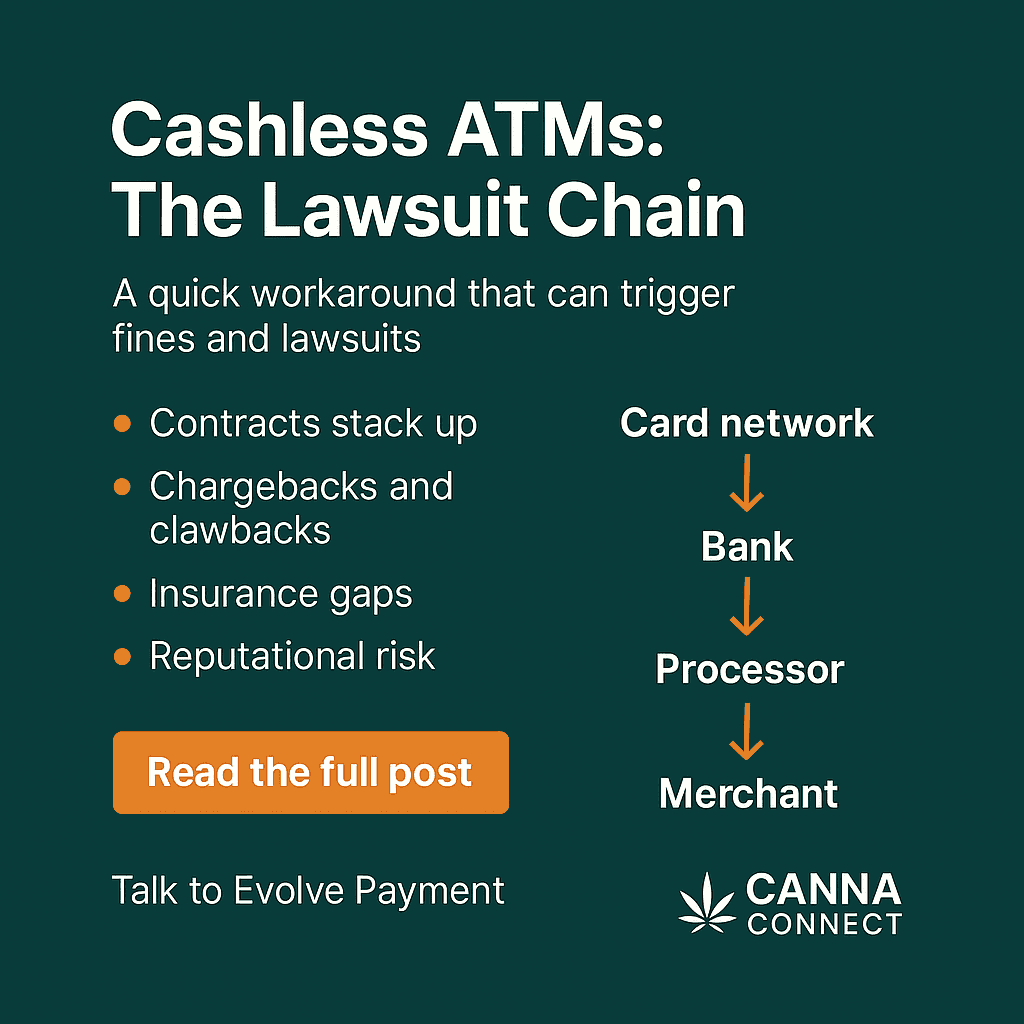
So what did Visa do...?? They fined the sponsoring bank $950,000.00 with a demand of $250,000.00 to be paid immediately.
What did the sponsoring bank do when they got fined...?? They passed the financial burden to the payment processor who facilitated the transaction.
What did the payment processor do...?? Well… they’re suing the cannabis operator and affiliates.

This is how one decision at the point of sale rippled through the sponsor bank, the processor, and right back to the dispensary.
Operators often do not realize how many parties they add to their liability chain.
Each ISO, processor, gateway, sponsor bank, vault cash provider, and software vendor becomes a potential plaintiff (or co-defendant turned plaintiff) once something breaks. To top this off, the contracts you signed when setting this up will likely make it worse. Many agreements include indemnification language that leaves the merchant paying not only for their own exposure, but for everyone they touched. That is how a clever workaround turns into a mess of lawsuits with real numbers and real urgency.
Every link in this chain is playing by its own rulebook.
Sponsor banks answer to their charters and federal examiners. Processors answer to card network operating regs and the warranties they make upstream. These are the networks that protect the integrity of the rails. When a party threatens that compliance posture...? The primary defense is not a press release, it is a claim, then a complaint accompanied by a summons, and so on… and on… as litigation unfolds.
Sue to allocate fault.
Sue to demonstrate diligence.
Sue to keep your charter, your network access, and your examiner’s confidence.
That is not a glitch in the system. It is the system Congress designed for banking in the United States, a structure that pushes risk downstream through contracts and pulls accountability back upstream through enforcement.
So when a dispensary miscodes a sale as an ATM withdrawal, it does more than trip a wire. It puts everyone else’s licenses, audits, and reputations on the line. The result is a predictable cascade: fines from the network to the bank, demands from the bank to the processor, lawsuits from the processor to the operator, and a courtroom where indemnities and pass-through clauses decide who pays the final bill. If you are the merchant at the end of that chain, you are not just a party to the story… you’re the backstop.
This is not intended to be a story about fear. It's a story about timing. Proactive movement today can save you seven figures tomorrow. Read your merchant and vendor agreements with a litigator’s eye. Map the flow of funds and know exactly who sits between you and settlement. Then move to compliant rails built for the cannabis industry.
Credit where it is due. Don Raleigh III from Evolve Payment has been ringing this bell for years and backing it up with rails that keep operators inside the rulebook. Evolve’s approach aligns card network rules, bank obligations, and processor warranties so the transaction stands on its own without miscodes or workarounds. That is what compliance forward looks like.
This is likely just the beginning of these suits. The judicial process and the laws that govern financial services were not written with cannabis workarounds in mind, but they will absolutely be used to unwind them.
Take the off-ramp while the choice is still yours.
Shut off anything that miscodes sales as ATM withdrawals.
Visa has mentioned a “secret shopper” program designed to identify non-compliant businesses. If you are operating a cannabis business on cashless ATMs, the window to act is open right now.
Yes, the banking industry (and congress) will likely change their perspective as cannabis continues to be de-stigmatized, but until that happens, it's best to stay compliant as things stand now.