NativeCare’s Next Chapter in Minnesota’s New Market
A signature can be real, and a door can still stay closed.
Minnesota has the law. Customers have the curiosity. Retail shelves have demand blinking like a cursor waiting for the next line. NativeCare has the kind of momentum most new cannabis businesses would trade a year of sleep for.
And yet the moment sits in a strange kind of pause.
Not because the plant is illegal. Not because the community is unwilling. Not because the vision is unclear.
It's because the systems don't speak the same language.
In young markets, the future is often decided by quiet things: software, tracking systems, workflows, and forms. By what can be scanned, transferred, verified, and approved. It is not romantic work, but it shapes everything that follows. When that machinery slows down, it does not just stall businesses. It delays access. It keeps prices high. It narrows the variety. It nudges would-be legal customers back toward the familiar gray market.
That tension sits at the center of NativeCare's next chapter: a promise signed into existence, and a bottleneck still powerful enough to hold it in place.
Last August, we made the drive north to Red Lake Nation for NativeCare's two-year celebration. The day carried the feeling of a milestone. Music drifted through the air, vendors lined the grounds, and visitors arrived from across the state to see what NativeCare had become. It was not just a dispensary anniversary. It felt like a gathering around something the community had built with intention and pride.
For many people, that visit was their first close look at what tribal leadership in a new cannabis industry could look like.
This story is what comes next.
To understand why the moment matters, it helps to go back to the beginning.
When NativeCare opened on Red Lake Nation land, it did not feel like a typical dispensary launch. It felt closer to a declaration.
Red Lake Nation did not build NativeCare simply to sell cannabis. They built it to demonstrate something. Sovereignty is not a slogan. It is a practice. It lives in daily decisions. In the right to choose your own timeline, your own rules, your own relationship with the plant, and your own definition of success. In an economy that rewards speed, sovereignty often requires something harder: the patience to move at the pace of integrity.
That discipline showed up early. NativeCare opened its doors and quickly became more than a retail storefront. It became a gathering place.
People arrived from small towns, suburbs, and cities across Minnesota. Some came out of curiosity. Others came because they had waited a long time to see legal cannabis handled with care. Inside, they found something that felt less transactional than expected. The atmosphere carries a familiar sense of gathering, the same feeling many people remembered from the two-year celebration. Conversations stretched longer than a quick purchase, and visitors often lingered, taking in the sense that this place represented something larger than retail.
For many visitors, the trip north began to feel like a small pilgrimage. It was a chance to see what the future of cannabis in Minnesota might look like when it was built with pride and cultural grounding.
Now the story is shifting.
What began as a destination in the north is steadily becoming part of everyday life in the metro. NativeCare's expansion into West St. Paul represents the first tribally licensed NativeCare storefront operating within state jurisdiction. It is a complicated sentence that reflects a complicated moment.
In practical terms, it means two systems learning how to work together. Minnesota requires cannabis to be tracked through the Metrc seed-to-sale platform. Red Lake Nation previously operated with a system called Dutchie.
When the cooperative agreement between the state and Red Lake Nation was signed in December 2025, the intention was clear: create a path for tribal and state cannabis systems to work alongside one another while protecting both public safety and tribal sovereignty.
But software does not always cooperate with intention.
Red Lake Nation has product ready for market, but differences in how the two systems record historical cultivation data have left that inventory temporarily stuck on paper. Products that have been grown, tested, and proven safe are waiting for the regulators to determine how the information should translate between platforms.
A barcode issue becomes a supply issue. A workflow problem becomes a market problem.
The consequences ripple outward quickly.
When supply stays tight, prices remain elevated longer than expected. Retail menus stay thinner. Newer operators struggle to secure inventory. Consumers grow impatient. The legacy market quietly fills the gaps that legal infrastructure has not yet bridged.
Back at Red Lake, those delays are not abstract policy debates. They touch budgets, staffing plans, and community expectations. They slow the ability to move product into the broader Minnesota market even as demand continues to grow.
And yet the philosophy behind NativeCare has never been built on speed alone.
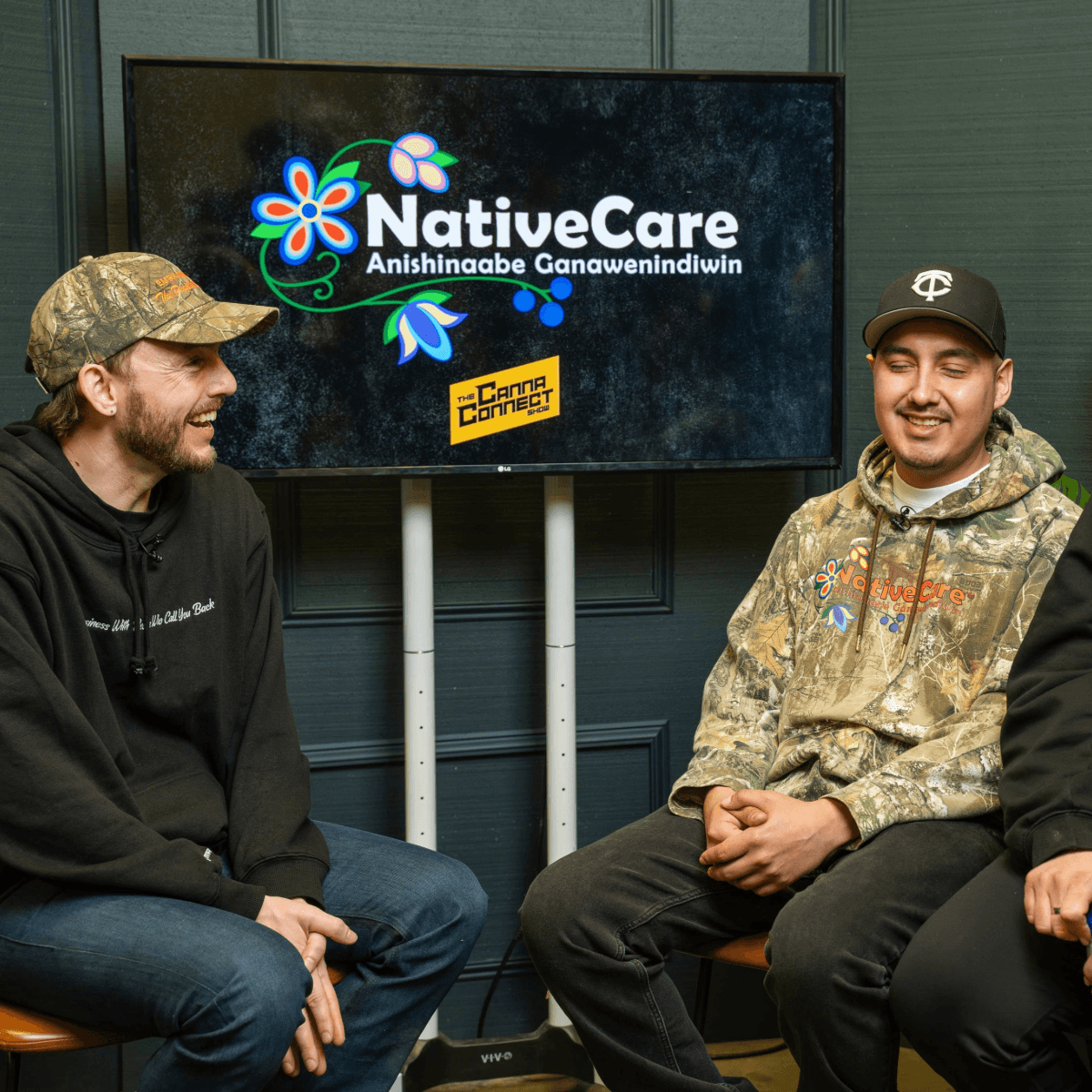
During a recent conversation, NativeCare CEO Kari Taylor described one of the reasons the plant matters right now.
"One of the things that cannabis excels at is putting people in an observer perspective without attachment, a more neutral position where you can look at things in a new way," Taylor said. "I do think it is a really good medicine for our time."
The idea of an observer perspective feels simple but carries weight. It suggests the ability to step back from the constant pressure of modern life without disconnecting from it. To watch your thoughts instead of being dragged by them. To experience a little quiet inside a noisy world.
That philosophy appears again in the way NativeCare thinks about products.
Rather than chasing the loudest question in the cannabis market, what is the strongest product available, many conversations begin with a quieter one: how do we help people feel safe using this plant?
That thinking led to products like infused olive oil and the upcoming Happy Pantry concept. The idea is simple. Cannabis becomes something measured and intentional, folded into familiar kitchen rituals where people already understand pacing and portion.
Measure. Pour. Add. Stop when it feels right.
For many consumers, especially older adults who approach cannabis carefully, that sense of control matters. It turns curiosity into confidence.
In fact, some of the fastest-growing parts of Minnesota's cannabis market are not the loudest. They are the quiet customers.
The person looking for sleep after years of restless nights. The person who had a bad experience decades ago and is cautiously reconsidering. The person who wants to understand dosage before taking a first step.
For those customers, trust becomes the doorway. Clear labeling. Professional storefronts. Staff who answer questions without judgment.
A regulated store becomes more than a point of sale. It becomes a bridge.
If the remaining technical hurdles are resolved, NativeCare could soon become another bridge for the broader Minnesota cannabis market as well.
Wholesale distribution from Red Lake Nation into the state's licensed retail system would expand product variety quickly. Shelves would fill faster. Social equity operators would gain another supply partner. Consumers would see the benefits in pricing and availability.
Most importantly, the state would gain something many young cannabis markets struggle to build: a working example of tribal and state systems collaborating without compromising safety or sovereignty.
A bridge that holds.
The first chapter of this story required a drive north.
Quiet highways. Pine forests. The sense that something new was happening outside the center of the map.
The next chapter may look different.
A ribbon cutting in West St. Paul. A storefront opening its doors to neighbors who may never have traveled to Red Lake Nation. A new customer stepping inside with a mix of curiosity and caution.
Some will arrive looking for relief. Some will arrive looking for sleep. Some will simply arrive to see what this new chapter of Minnesota's cannabis story feels like up close.
If NativeCare's philosophy holds, many of them will leave with a different understanding of what this plant can be.
Not hype. Not escape.
Steadiness.
Red Lake Nation has already shown what sovereignty looks like in motion.
Now Minnesota has the opportunity to show it can build a market worthy of the example Red Lake Nation has already set in motion.
Tommy Shirley
Canna Connect
The opinions expressed in this article are those of the author and do not necessarily reflect the views of NativeCare, Red Lake Nation, or any affiliated organizations. This piece is intended for informational and editorial purposes.