Packaging Starts Before Harvest: Davis Tiburzi and the CannaZip Commitment

Packaging is one of the last things a customer sees before deciding whether to purchase a cannabis product. For the operator behind that product, however, it needs to be one of the first things planned.
That was one of the central lessons from our conversation with Davis Tiburzi, Founder and CEO of CannaZip Packaging, on The Canna Connect Show.
Davis joined us at CannaCon Midwest 2026 to discuss the relationship between packaging, product quality and brand perception. He also explained why cultivators, manufacturers and product brands should begin talking with their printing and packaging partners well before harvest or launch day.
WATCH THE FULL INTERVIEW ON YOUTUBE
“Start at the end, and then let’s backtrack.” — Davis Tiburzi
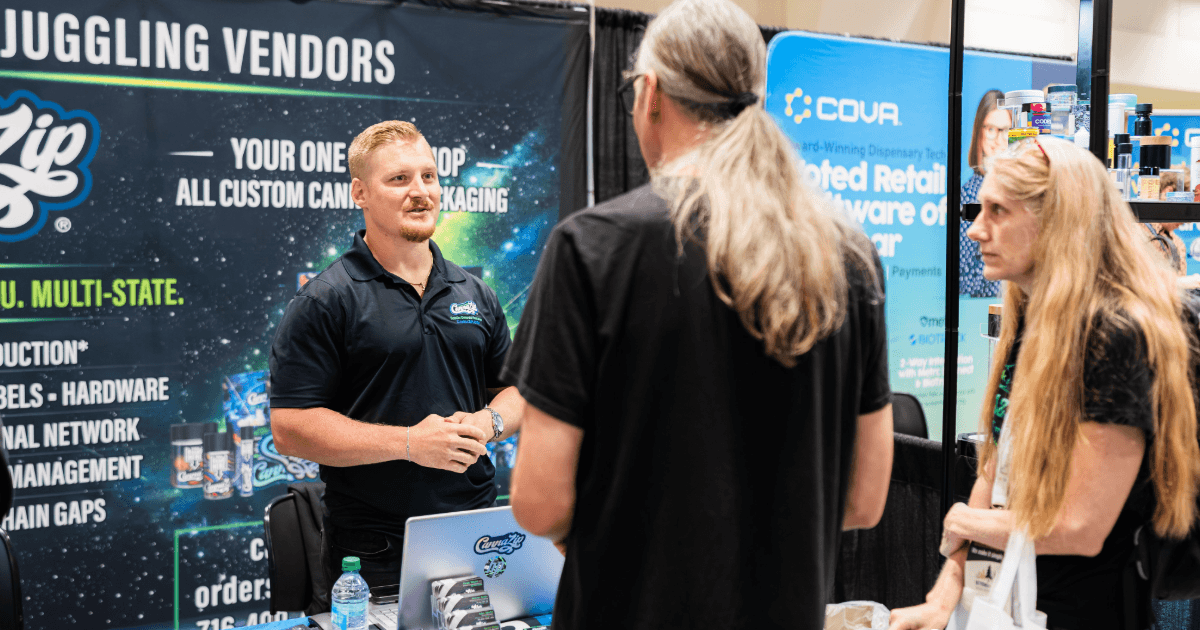
Davis Tiburzi speaks with attendees at the CannaZip booth during CannaCon Midwest 2026.
From commercial printing to cannabis packaging
CannaZip grew out of Davis’s experience selling commercial printing equipment. For nearly a decade, he worked with large-scale printing systems and developed a working knowledge of ink chemistry, print technology, film composition, manufacturing processes and production workflows.
That experience also showed him where packaging suppliers regularly fell short.
Customers dealt with long lead times, limited flexibility, inconsistent product quality and vendors who were difficult to reach when something changed. Davis saw an opportunity to create a company built around filling those gaps.
Custom Flex Packaging launched in July 2021 and began selling later that year after introducing the business at MJBizCon. CannaZip operates as its cannabis-focused brand, serving cultivators, processors, manufacturers, white-label producers and consumer brands with custom packaging and production support.
The goal was not simply to sell bags. Davis wanted to create a more responsive packaging company—one capable of helping customers move from an idea to a finished product without losing time, quality or momentum.
A commitment measured by showing up
CannaZip’s commitment to cannabis is visible in its continued presence across the country and here in Minnesota.
Davis told us the company participates in more than 25 trade shows nationally each year. CannaCon Midwest 2026 marked another year of the CannaZip team showing up in Minnesota to meet operators, learn about the developing market and answer questions directly.
CannaZip also supported the CannaCon after-party at Earl Giles and has become the official packaging partner of Canna Connect.
That matters because Minnesota businesses need more than a distant supplier. They need partners who understand that the market is still forming, timelines change and many operators are navigating regulated production for the first time.
Davis describes CannaZip’s approach as consultative. The company works backward from the customer’s end goal, helping determine the most practical path without creating unnecessary cost or pressure. The belief behind that approach is straightforward: when a customer succeeds, the packaging partner succeeds alongside them.
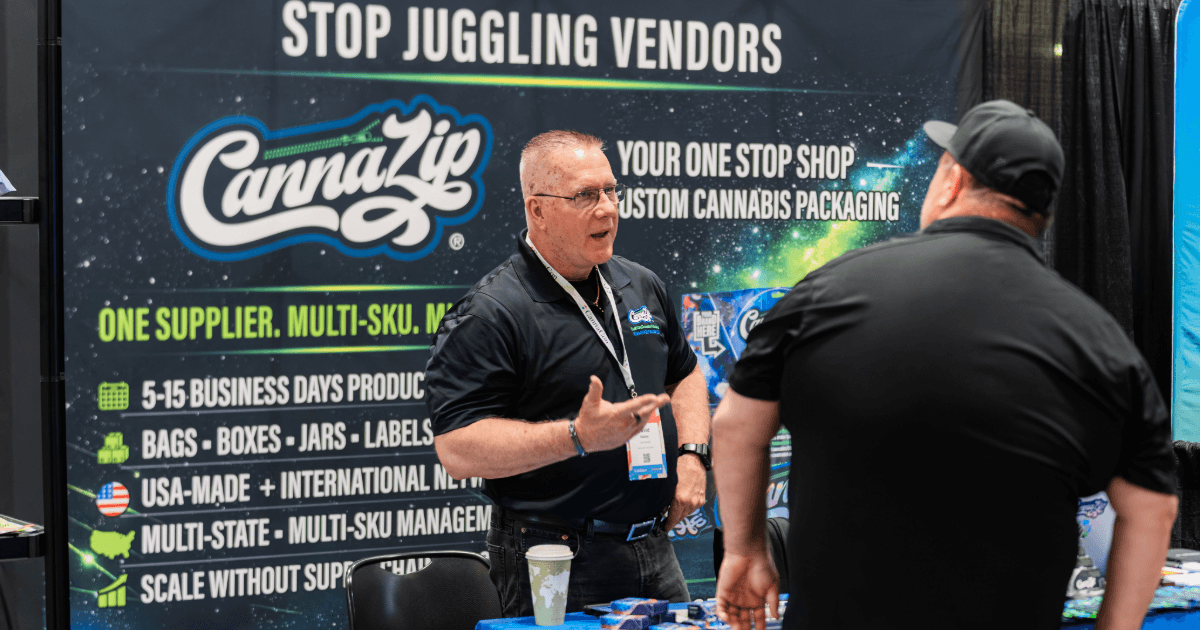
The CannaZip team uses trade shows to answer questions and help operators understand their packaging options.
Why packaging affects the value of the product
During the interview, Davis compared packaging to the difference between premium wine and boxed wine. If customers cannot touch, taste or smell the product before buying it, presentation becomes a major signal of quality.
A great product placed in poor packaging may be overlooked. A thoughtful package can communicate consistency, care and value before the customer ever opens it.
For cannabis businesses, that presentation also has to perform several practical jobs. Packaging must protect freshness, support safe use, hold up throughout distribution and provide enough room for required information. It must be visually interesting without crossing the line into imagery that could appeal to children.
That makes packaging both a creative decision and an operational responsibility.
Best practices for working with a printing and packaging partner
The strongest packaging projects begin with clear expectations and enough time to make informed decisions. Based on our conversation with Davis, Minnesota operators should follow these practices.
1. Start planning before harvest
Do not wait until the product is ready to begin thinking about packaging. Start with the intended harvest, production or launch date and work backward.
CannaZip reports a production window of approximately five to 15 business days for most of its products after artwork approval and deposit. New brands should also allow two to four weeks for design, revisions and proof approval, plus time for shipping.
A six-to-eight-week planning window gives the team room to solve problems without turning every decision into an emergency.
2. Define the product before requesting a quote
Tell the packaging partner what the package will contain, where it will be sold and how it should feel in the customer’s hands.
Important information includes:
Product type and package size
State or market where it will be sold
Child-resistance requirements
Estimated order quantity
Number of products or SKUs
Desired launch date
Brand audience and visual direction
Distribution and storage conditions
The more the partner understands at the beginning, the more useful its recommendations will be.
3. Treat compliance as a shared conversation—but retain responsibility
An experienced packaging company can provide resources, flag concerns and help interpret common requirements. The operator remains responsible for confirming that the final package and label comply with current regulations.
Do not rely on a casual internet search or assume that a package used in another state will automatically work in Minnesota. Have the final design reviewed by the appropriate compliance or legal professional before production.
4. Approve every proof carefully
The proof is the final opportunity to catch incorrect text, colors, dimensions, warnings, potency information or branding details before production.
Create a formal approval process. Assign one person to collect feedback, verify the final version and authorize production. Multiple team members sending separate revisions directly to the printer can create confusion and expensive mistakes.
5. Ask about minimums, prototypes and limited runs
New businesses should avoid tying up unnecessary cash in packaging before they understand demand.
CannaZip offers low minimum order quantities and some products with no minimums, creating opportunities for prototypes, pilot products and limited releases. A smaller first run may cost more per unit, but it can be less expensive than storing thousands of packages for a product that changes before the next order.
6. Evaluate service—not only unit price
The lowest quote is not always the lowest-cost decision. Slow communication, missed deadlines or inconsistent quality can delay an entire product launch.
Ask how quickly the company responds, where products are manufactured, what its normal lead times are and what happens when a problem arises. A reliable packaging partner should help protect the operator’s time as well as its budget.
7. Consider the entire packaging system
Operators may need more than a primary bag or container. Boxes, labels, shrink sleeves, jars, vape hardware, label application and design services may all be part of the finished system.
Using a partner that can coordinate multiple pieces can reduce the number of vendors and help prevent supply-chain gaps. It also creates greater consistency across materials, colors and finished products.
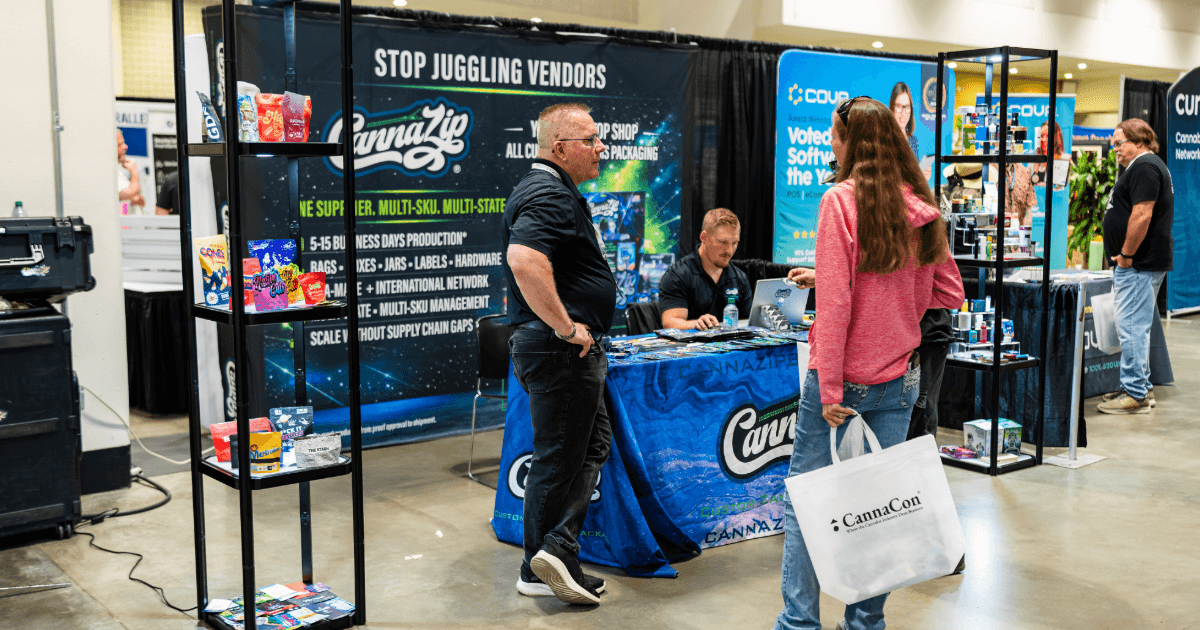
The CannaZip booth at CannaCon Midwest 2026 showcased packaging formats and production support for cannabis businesses at different stages of growth.
Supporting a developing Minnesota market
Davis has watched cannabis markets across the country open, consolidate and respond to price compression. His hope for Minnesota is a balanced market—one where production, retail access and regulation develop in a way that gives responsible businesses room to succeed.
That requires packaging partners to understand more than printing specifications. They need to understand how delays, regulations, cash constraints and shifting launch dates affect the businesses they serve.
CannaZip’s continued presence in Minnesota reflects that commitment. The company is not waiting for the market to become easy. Its team is showing up while operators are still building, asking questions and determining what their businesses will become.
Thank you to Davis Tiburzi and the CannaZip team for supporting Canna Connect, participating in CannaCon Midwest and investing time and expertise in Minnesota’s cannabis community.
Watch our complete conversation with Davis on YouTube or listen through your preferred podcast platform. For more reporting, interviews and updates from Minnesota’s cannabis industry, subscribe to The Cannaverse.